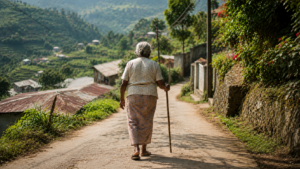
 In Sri Lanka’s remote hill communities, growing demographic shifts, rugged terrain, and economic pressures are leaving many older adults without the support they need. Recent field research from the Centre for Poverty Analysis (CEPA) highlights the realities of “care poverty” in Kandy’s hill villages, where isolation, youth migration, and limited social safety nets create deep vulnerabilities. The findings emphasize that elder care should no longer be treated strictly as a private family responsibility. Instead, it should be recognized as an essential part of the social support systems needed for human development, economic participation, and intergenerational wellbeing. This research was conducted under the FutureWORKS Asia initiative, administered by LIRNEasia, and is part of the FutureWORKS Collective—a global effort supported by the International Development Research Centre (IDRC), Canada.
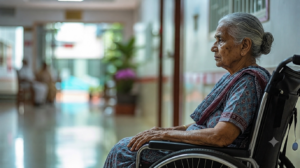 As societies grow older, their needs too evolve, with greater pressure on care systems being widely acknowledged as a critical issue. Broadly, care work involves supporting the physical, mental and development needs of people either directly or indirectly, while a care system refers to its overall organization (UN, 2024). Care is an integral component of the world of work. When care needs are sufficiently met, it can lead to better health and wellbeing outcomes and allow people to reach their full potential in productive work. Caring is in turn also a form of work in both paid and unpaid capacities, whether it is performed within or outside the home.