
On 21 May 2026, Women in Global Health Philippines, the Alliance for Improving Health Outcomes (AIHO), the National Association of Public Health Nurses, Inc. (NAPHN), and 101 Health Research convened a virtual event titled ‘Nursing at the Frontline of Change: Digital Disruption, Climate Stress, and the Future of Nursing Work in the Philippines’. The event featured findings from a study that analysed more than 14,000 online nursing job postings across 13 local and international online recruitment platforms, alongside an online survey and key informant interviews. The findings revealed significant shifts in nursing work in the Philippines, including a growing demand for non-traditional BPO medical roles, stark wage gaps between domestic and international employment opportunities, an increasing burden of dual administrative and clinical responsibilities, and severe operational challenges driven by climate change. This research was conducted under the FutureWORKS Asia initiative, administered by LIRNEasia, and is part of the FutureWORKS Collective—a global effort supported by the International Development Research Centre (IDRC), Canada.
 Ride-hailing and delivery apps have transformed how people move and shop in Bangladesh’s cities, but social protection systems have struggled to keep pace with these changes. The article highlights the fragmented nature of existing coverage and calls for a portable, contributory, and progressively expandable system that protects platform workers without waiting for all questions surrounding their employment status to be resolved.
 As platform work continues to expand, workers are increasingly navigating the combined pressures of technological change, AI-driven automation, and climate-related disruptions. Ensuring that this evolving labour market remains resilient and inclusive requires policies grounded in workers’ experiences and informed by dialogue among key stakeholders. On 8 July 2026, De La Salle University’s Social Development Research Center (DLSU-SDRC), together with the Manila Observatory, convened a Policy Dialogue and Stakeholders’ Forum in Manila to examine the challenges and opportunities shaping the future of platform work in the Philippines. The dialogue drew on research involving more than 100 in-depth interviews with platform workers and industry pioneers across different regions of the country. The findings informed the discussion on social protection and policy measures that could better respond to the realities faced by platform workers in a rapidly changing world of work.
  On June 19, 2026, researchers, clinicians, and policy advocates gathered for a virtual learning session titled “Data Scraping for Health Research: How to Use Online Data in Your Study.” The session explored data scraping as an emerging and practical methodological approach for innovative, data-informed health research and policy development. The session was organized by Women in Global Health Philippines, the Alliance for Improving Health Outcomes (AIHO), Damiana Social Ventures, and 101 Health Research. The session showcased data scraping as an automated process for efficiently collecting large amounts of data from online platforms, reducing the need for manual data collection. It also highlighted how health research traditionally relies on surveys and clinical records, which can be time-consuming, while data scraping can provide access to real-time insights from social media, public health websites, and job portals.
 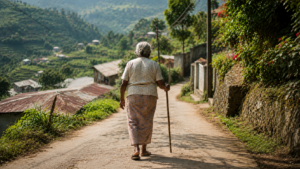 In Sri Lanka’s remote hill communities, growing demographic shifts, rugged terrain, and economic pressures are leaving many older adults without the support they need. Recent field research from the Centre for Poverty Analysis (CEPA) highlights the realities of “care poverty” in Kandy’s hill villages, where isolation, youth migration, and limited social safety nets create deep vulnerabilities. The findings emphasize that elder care should no longer be treated strictly as a private family responsibility. Instead, it should be recognized as an essential part of the social support systems needed for human development, economic participation, and intergenerational wellbeing. This research was conducted under the FutureWORKS Asia initiative, administered by LIRNEasia, and is part of the FutureWORKS Collective—a global effort supported by the International Development Research Centre (IDRC), Canada.
  As automation, artificial intelligence, and structural economic changes redefine labour markets, how can Bangladesh and the Global South prepare for a future that is productive, inclusive, and resilient? The Centre for Policy Dialogue (CPD) recently hosted the webinar, ‘Work in Flux: Foresight for the Future of Work in the Global South’, on 15 July 2026. The webinar disseminated the key findings and final policy recommendations from CPD’s Bangladesh foresight study while facilitating knowledge exchange on the changing world of work. The event brought together leading researchers and policy experts from around the world, particularly South Asia and Latin America, to exchange perspectives on how governments, businesses, and workers can prepare for multiple plausible futures. This research was conducted under the FutureWORKS Asia initiative, administered by LIRNEasia, and is part of the FutureWORKS Collective—a global effort supported by the International Development Research Centre (IDRC), Canada.
  A policy report by the DLSU Social Development Research Center and the Manila Observatory examines how climate change and technological development expose the limitations of existing social protection systems for platform workers in the Philippines. The report highlights key policy recommendations, including flexible social protection, mandatory accident insurance, and worker-centred app safety features to help build more resilient and inclusive labour markets.
 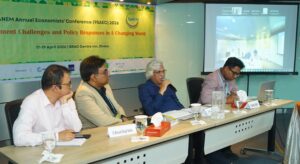 To understand how the technological and green transition is affecting labour dynamics in the RMG sector, particularly for marginalised groups such as women, SANEM, in collaboration with IHD, is jointly conducting a study titled "Gender Implications of the Future of Work in South Asia: Insights from Garment Manufacturing in Bangladesh and India." IHD is leading the India component and SANEM the Bangladesh component. As part of the sharing and validation of the study's preliminary findings, a dedicated technical session titled "The Challenges of Technological Change and Climate Transition in Garment Manufacturing in Bangladesh and India" was organised at the 9th SANEM Annual Economists' Conference (9SAEC).
 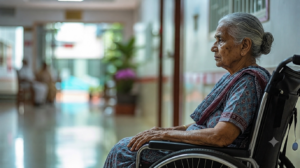 As societies grow older, their needs too evolve, with greater pressure on care systems being widely acknowledged as a critical issue. Broadly, care work involves supporting the physical, mental and development needs of people either directly or indirectly, while a care system refers to its overall organization (UN, 2024). Care is an integral component of the world of work. When care needs are sufficiently met, it can lead to better health and wellbeing outcomes and allow people to reach their full potential in productive work. Caring is in turn also a form of work in both paid and unpaid capacities, whether it is performed within or outside the home.
  Automation, AI, and shifting global economic trends are transforming labour markets. As Bangladesh prepares for this transition, evidence alone is not enough—effective policy also requires dialogue.On 13 July 2026, the Centre for Policy Dialogue (CPD) convened a multi-stakeholder consultation, bringing together policymakers, private sector representatives, trade unions, development partners, and researchers to discuss emerging findings from its ongoing Future of Work study and present the new policy brief, ‘Is Bangladesh Ready for the Future of Work?’