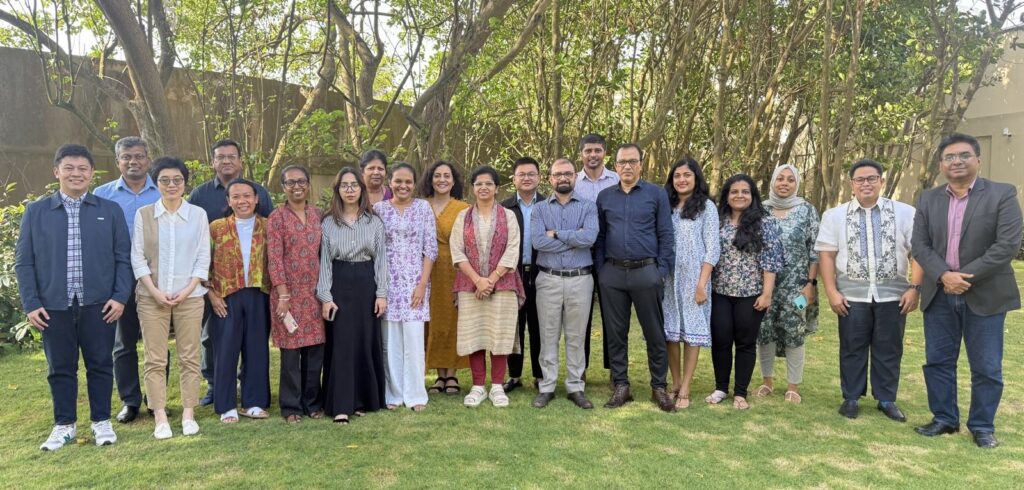
In August 2025, the sub-grantees of Cycle 1 of the FutureWORKS Asia network came together in Negombo, Sri Lanka, for its first-ever in-person Research Review Meeting. The meeting held from 20–22 August 2025 in Negombo, Sri Lanka, brought together representatives from all five Cycle 1 FutureWORKS Asia sub-grantee organizations and the FutureWORKS Global hub, members of the Advisory Board, and the LIRNEasia team that is part of the FutureWORKs Asia project.
The Negombo Research Review Meeting was designed as a milestone checkpoint for the program’s Cycle 1 projects, which began implementation earlier in 2025. The five research projects focus on diverse but connected areas: platform work and climate risk in the Philippines; nursing and care labour transitions in the Philippines; labour market futures in post-LDC Bangladesh; the care economy in Sri Lanka; and gendered transitions in the garment sector across India and Bangladesh.
Project highlights from across the network
The five sub-grantee teams, spanning Bangladesh, India, the Philippines, and Sri Lanka,shared emerging insights from their projects, each offering a different lens on how digitalisation, climate pressures, and social change are reshaping work across Asia.
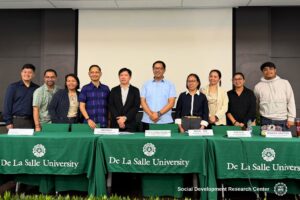
The team from the Philippines (DLSU–SDRC and Manila Observatory) is exploring how platform workers contend with climate-related disruptions in their daily work. Early findings point to the heightened risks riders and delivery workers face during heatwaves and extreme weather, with implications for their earnings, health, and overall job security. Encouragingly, the team has begun to see growing policy interest on the need for more climate-responsive social protection and safety standards for platform labour.
Also from the Philippines, the Women in Global Health–AIHO project is examining how digital and environmental transitions are transforming nursing and care work in the Philippines, a field dominated by women and often undervalued. Initial analysis suggests a growing mismatch between existing training pathways and the skills increasingly demanded to deal with the dual pressures of digitalization and climate risk. The project’s early engagement with government agencies is already influencing conversations on how to design more gender-responsive workforce strategies and integrate digital and climate competencies into training pathways for nurses.
From Bangladesh, the Centre for Policy Dialogue (CPD) shared insights from its work on the country’s labour market futures as it graduates from least-developed country (LDC) status. The project has identified key forces shaping the future of work, including climate adaptation, technological change, and evolving gender dynamics and is engaging policymakers on how these drivers should inform skills development, industrial strategy, and social protection reforms. The project also fostered inclusive research processes, ensuring women and persons with disabilities are meaningfully represented in the evidence base.
In Sri Lanka, the Centre for Poverty Analysis (CEPA) is leading work on mapping the country’s care economy and informing the development of a national care sector roadmap. The research, undertaken in partnership with government agencies and the ILO, is already feeding into revisions of Sri Lanka’s Social Protection Strategy. Expanding beyond initial plans, the work now also considers community-based care models and how care services can be strengthened within the wider social protection system.
Finally, the joint project by SANEM (Bangladesh) and Consultants from the Institute for Human Development (India) is analysing how climate change, sustainability pressures, and technological upgrading are reshaping garment-sector jobs across both countries. Early insights show how automation and compliance-driven environmental standards intersect with entrenched gender norms, creating both risks and opportunities for women workers. The research is helping to inform a growing regional dialogue with industry bodies on ensuring that the sector’s green and digital transitions promote more inclusive outcomes.
Collective learning through themed knowledge sessions
As part of its role as the Asia Hub, LIRNEasia led a series of knowledge-sharing and capacity-building sessions during the Negombo meeting. The first session opened with a conversation on worker narratives in the Global South, which looked into the lived realities of workers. The sessions showcased how workers’ experiences are shaped not only by the tasks they perform, but also by the cultural norms, digital infrastructures, and economic structures within which they navigate their working lives and also the risks of framing Southern workers through Global North assumptions and highlighted the need for more contextually grounded analysis.
This set the tone for the following deep dive into just transitions, which unpacked why just transition frameworks must pair environmental goals with fairness for workers who bear the brunt of change and how women remain concentrated in low-paid, low-skill roles and face disproportionate displacement as factories adopt more advanced technologies.
The discussion then shifted to platforms and AI, exploring how data work, algorithmic systems, and emerging skill demands are reshaping labour markets. The session examined how emerging technologies are altering labour markets and how much of AI development relies on “invisible” data work – labour that is often hidden, undervalued, and lacking meaningful protections.
The sessions also looked carefully at the role of data itself, which discussed the opportunities and pitfalls of using machine learning and online job portal data in labour market analysis, prompting reflection on ethics, representativeness, and methodological rigour. Conversations on skilling challenges highlighted the financial and institutional hurdles countries face in preparing workers for rapid technological and climate shifts and how in Bangladesh’s garment sector, women remain systematically excluded from higher-value digital and climate-resilient roles due to entrenched gendered skill divides and furthermore, how limited fiscal space, uneven programme quality, and operational constraints hinder countries’ ability to fund and deliver effective, future-ready skilling pathways at scale .
The final session brought these threads together through the lens of social protection and the care economy. A discussion on care economy highlighted the highly varied approaches countries are taking to extend social protection to platform workers, noting differences in worker classification, contributory models, benefit design, and legal enforceability, leaving many gig workers still outside formal safety nets. The session focused on the need for adaptive, human-centred social protection systems as digitalisation and climate risks accelerate, calling for universal approaches, better financing, and stronger institutional capacity.
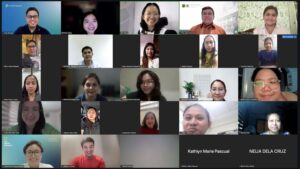
Adding to the regional exchange, Sabina Dewan from the JustJobs Network, who leads the FutureWORKS Collective, the Global Hub, also took part in the meeting and contributed to the discussions. The meeting further featured remote presentations from Ruth Castel-Brancofrom Wits University (representing the Eastern and Southern Africa hub) and Ramiro Albrieuof RedSur (from the Latin American network), who provided valuable perspectives on ongoing FutureWORKS projects in their respective regions. Their presentations helped situate the Asia network’s work within the broader global FutureWORKS initiative, highlighting common challenges and opportunities across the Global South.