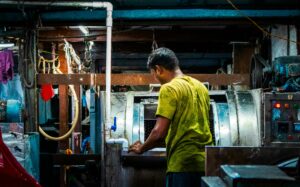
As automation, AI, and evolving production systems reshape manufacturing and digital service sectors in Bangladesh, how prepared is the country for what lies ahead? As part of the FutureWORKS Asia-supported project, ‘Life after Life: Future of Work in Bangladesh‘, researchers from the Centre for Policy Dialogue (CPD) have published an op-ed article exploring Bangladesh’s readiness for these transformations. The article highlights the need for coordinated policies on skills development, social protection, and inclusive labour market transitions to ensure that no one is left behind. The research is supported by the FutureWORKS Asia initiative, administered by LIRNEasia, and is part of the FutureWORKS Collective—a global effort supported by the International Development Research Centre (IDRC), Canada. Read the full article published in The Daily Star on 4 July 2026.
 Automation, AI, and shifting global economic trends are transforming labour markets. As Bangladesh prepares for this transition, evidence alone is not enough—effective policy also requires dialogue.On 13 July 2026, the Centre for Policy Dialogue (CPD) convened a multi-stakeholder consultation, bringing together policymakers, private sector representatives, trade unions, development partners, and researchers to discuss emerging findings from its ongoing Future of Work study and present the new policy brief, ‘Is Bangladesh Ready for the Future of Work?’

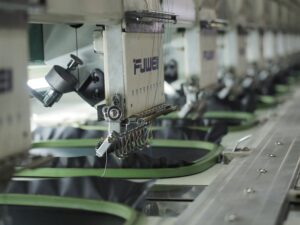 Garment workers in Bangalore are navigating an industry increasingly shaped by technological change, shifting production demands, and growing uncertainty. This piece explores how these changes are impacting workers’ everyday experiences, particularly through a gendered lens, offering insights into the realities of labour and the future of work in South Asia.
 Gig work is creating new opportunities for flexible employment in Sri Lanka, but workers continue to face challenges around income security, access to protections, bargaining power, and long-term sustainability. This article explores six key realities shaping Sri Lanka’s gig economy and highlights the need for policies and practices that ensure a fairer future for platform workers.
 As platform work expands in the Philippines, workers face growing challenges from extreme weather, unsafe roads, rising energy costs and insecure livelihoods. On 4 June 2025, De La Salle University’s Social Development Research Center (DLSU-SDRC), in partnership with the Manila Observatory (MO), convened a Stakeholders Forum in Manila to launch the Resilient Platform Work PH project and explore the links between climate change and platform work.