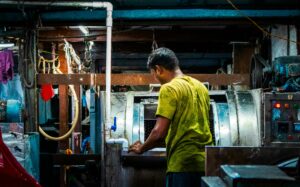
As automation, AI, and evolving production systems reshape manufacturing and digital service sectors in Bangladesh, how prepared is the country for what lies ahead? As part of the FutureWORKS Asia-supported project, ‘Life after Life: Future of Work in Bangladesh‘, researchers from the Centre for Policy Dialogue (CPD) have published an op-ed article exploring Bangladesh’s readiness for these transformations. The article highlights the need for coordinated policies on skills development, social protection, and inclusive labour market transitions to ensure that no one is left behind. The research is supported by the FutureWORKS Asia initiative, administered by LIRNEasia, and is part of the FutureWORKS Collective—a global effort supported by the International Development Research Centre (IDRC), Canada. Read the full article published in The Daily Star on 4 July 2026.
 As societies grow older, their needs too evolve, with greater pressure on care systems being widely acknowledged as a critical issue. Broadly, care work involves supporting the physical, mental and development needs of people either directly or indirectly, while a care system refers to its overall organization (UN, 2024). Care is an integral component of the world of work. When care needs are sufficiently met, it can lead to better health and wellbeing outcomes and allow people to reach their full potential in productive work. Caring is in turn also a form of work in both paid and unpaid capacities, whether it is performed within or outside the home.

 Automation, AI, and shifting global economic trends are transforming labour markets. As Bangladesh prepares for this transition, evidence alone is not enough—effective policy also requires dialogue.On 13 July 2026, the Centre for Policy Dialogue (CPD) convened a multi-stakeholder consultation, bringing together policymakers, private sector representatives, trade unions, development partners, and researchers to discuss emerging findings from its ongoing Future of Work study and present the new policy brief, ‘Is Bangladesh Ready for the Future of Work?’
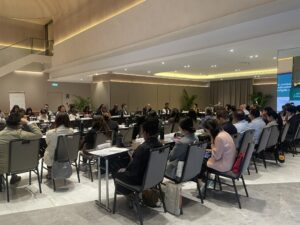 The rapid technological advancement and Artificial Intelligence (AI) have become synonymous with conversations about the future of work. Headlines often focus on which jobs are at risk and how quickly technology will replace workers. But the reality is far more complex. On 11 June 2026, researchers and practitioners from across Asia gathered at the Pullman King Power in Bangkok for a knowledge-sharing session hosted by LIRNEasia and the Regional Economic and Social Analysis Unit (RESA) of the International Labour Organization (ILO) Regional Office for Asia and the Pacific. The session explored how AI, digital transformation and platform work are reshaping labour markets – and what this means for workers, businesses and governments.
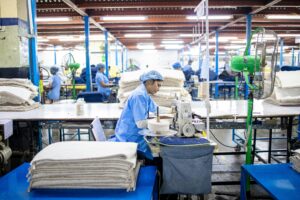 Bangladesh’s manufacturing sector has long been a key driver of women’s employment — but recent trends reveal a troubling shift. Despite growth in exports and overall employment, women are increasingly being pushed out of urban manufacturing jobs, particularly in the garment sector. This op-ed explores the drivers behind this shift and reflects on its broader implications for inclusive growth and the future of work.